Ages 5-7
Spark Beginners
First-time learners who need playful number confidence.
Explore Programs ->*Abacus learning for children
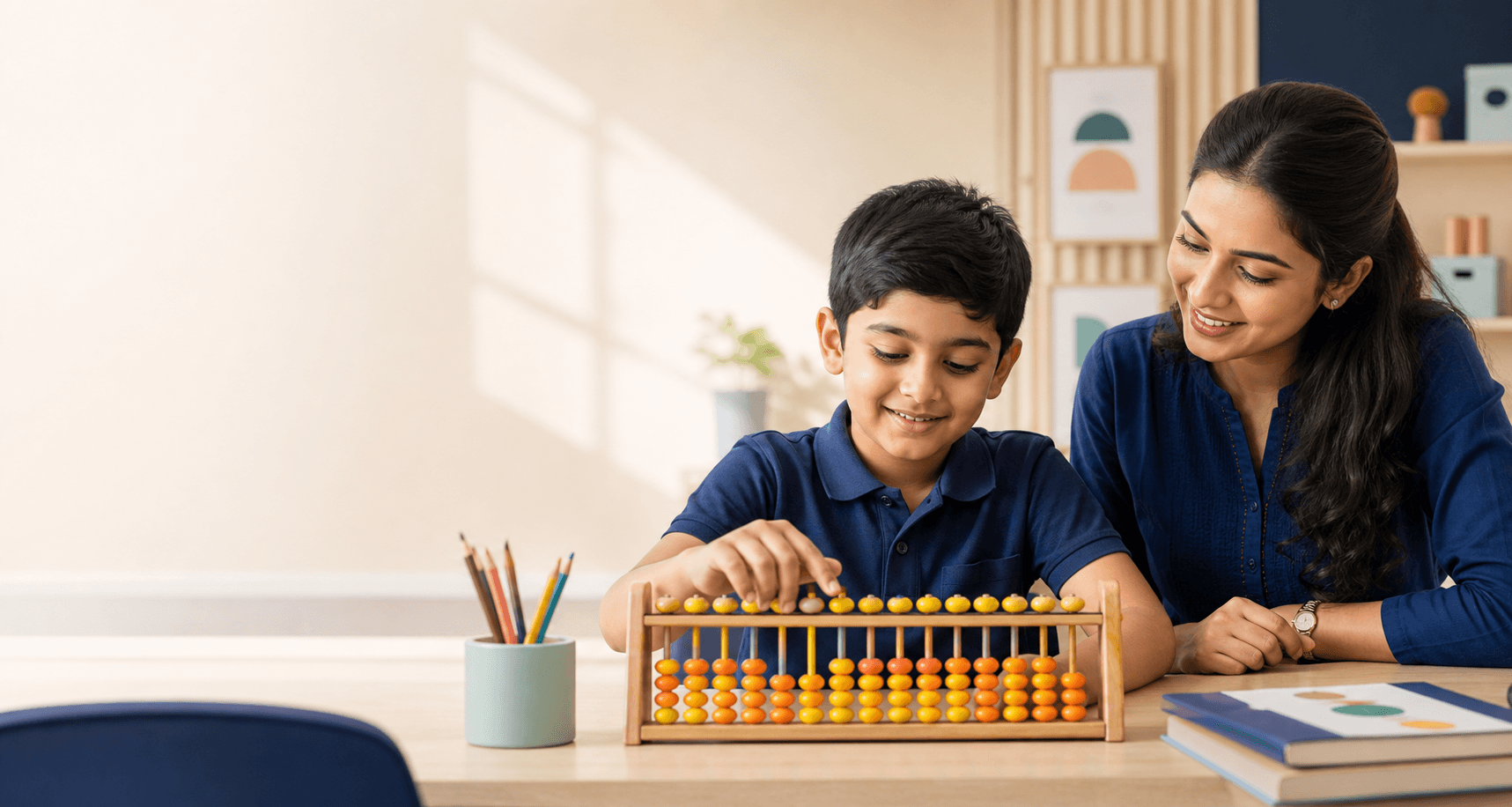
Children learn with bead practice, short worksheets, level checks, and simple updates parents can actually understand.
Ages 5-14
Age-wise levels
Live classes
Teacher-led practice
Parent updates
Clear progress view
Progress tracking
Parent updates
Parent updates
Progress clarity
Level-wise learning
Curriculum path
Math Fear
Math Confidence
From hesitation to confidence
Children touch the beads, say the numbers, solve a few sums, and then repeat the idea on worksheets. Parents can see what was practised and what needs one more round at home.
Abacus Lab
Open a realistic soroban-style abacus. Try 7, 14, 26, and 105, and see how bead movement helps children understand place value.
Soroban-style abacus
Upper bead = 5.
Each lower bead = 1.
Beads touching the bar are counted.
Our programs
Three simple paths help parents choose without guessing. Each level starts with what the child can handle today.
First-time learners who need playful number confidence.
Explore Programs ->Children who can follow steps and need steadier practice.
Explore Programs ->Older learners who like challenge and want stronger speed.
Explore Programs ->Parent dashboard
Parents should be able to see the level, worksheets, attendance, practice streak, and teacher note in one place.
Parent dashboard preview
Current level
Current level preview
Attendance
Live data
Worksheets completed
Live data
Practice streak
Live data
72%
Sample level progress
Teacher note
A teacher note can show what your child practised and what to repeat at home.
Badges and progress
Recent activity preview
Worksheet checked by teacher
Level progress updated
Next practice task shared
Inside a class
A class has a rhythm: warm up, move beads, picture the beads, practise on paper, and hear what to fix.
Quick number exercises help children settle in and start with confidence.
Children use the abacus to understand place value and operations visually.
The teacher guides learners from physical beads to mental images.
Short practice rounds build accuracy, speed, and calm problem-solving.
Parents and students receive simple next steps after practice.
Before enrolment
The parent guide and demo answer the details. Here is the quick version.
We look at age, number comfort, attention span, and whether the child can follow short teacher instructions.
The demo begins gently with bead movement and simple sums, so the teacher can see how your child responds.
Parents are guided on the level, worksheet practice, attendance, and what to repeat at home.
Book a free demo class and see whether this learning style feels right for your child.